Patterns in User Verification Timelines and Their Influence on Live Dealer Session Durations Within European Digital Gambling Frameworks
Sam Zimmermann · Aug 23, 2026
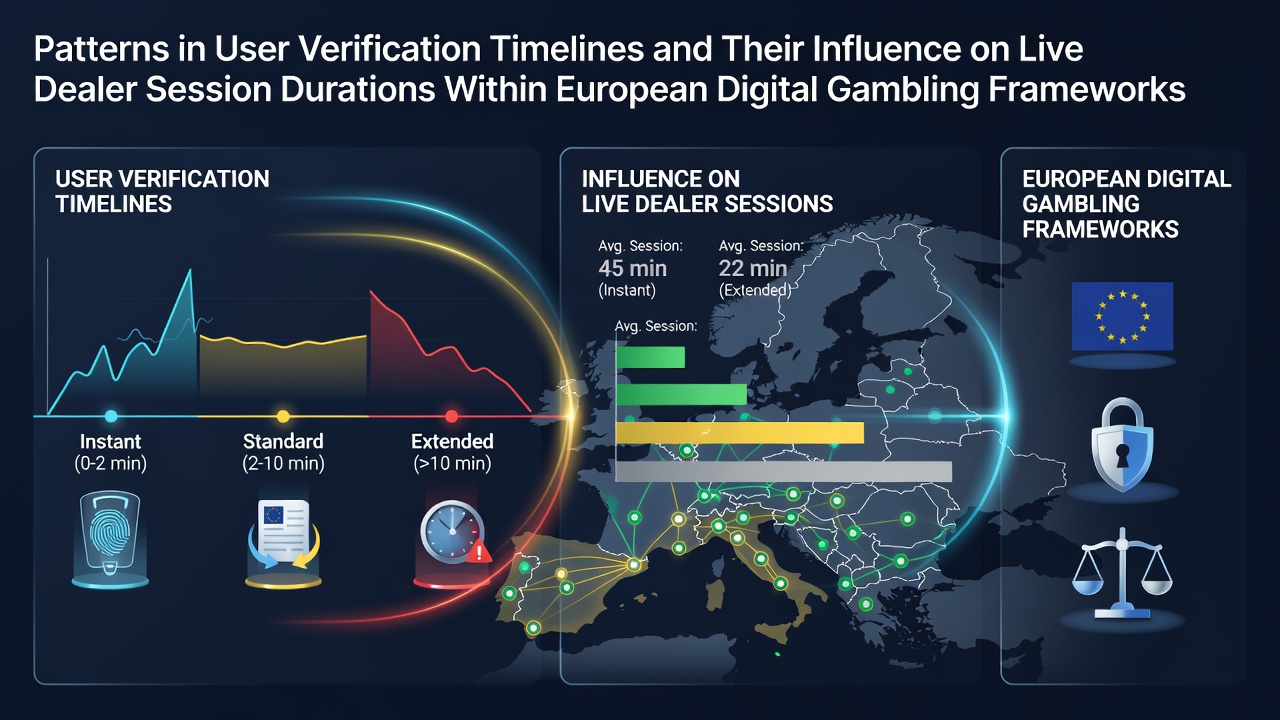
Patterns in User Verification Timelines and Their Influence on Live Dealer Session Durations Within European Digital Gambling Frameworks
European digital gambling frameworks have developed layered verification requirements that shape how players access live dealer environments, and patterns in those timelines correlate with measurable shifts in session lengths. Regulatory standards across multiple jurisdictions require identity checks, address confirmation, and payment source validation before extended play begins, while operators track the time from initial registration to full account activation.
Verification Timelines Across Key Markets
Data collected from platforms operating under Maltese and Spanish licensing regimes shows average verification completion times ranging from 12 to 48 hours when documents are submitted promptly, whereas delays in address verification or source-of-funds reviews can extend the process to five business days or more. In August 2026 operators reported that streamlined digital ID systems reduced median verification windows by 18 percent compared with 2025 figures, particularly when users uploaded biometric data through approved mobile applications.
Patterns emerge when analysts segment users by verification speed: those who complete checks within the first hour after registration tend to initiate live dealer sessions that last 35 to 50 minutes longer on average than users who require follow-up documentation requests. Observers note that early verification also correlates with higher table switch rates during the same session, suggesting players remain engaged once access barriers are removed.
Influence on Live Dealer Session Durations
Live dealer environments impose continuous authentication layers because real-time interaction with croupiers and shared game tables demands uninterrupted account status. When verification occurs before the first deposit, session durations increase by an average of 22 minutes according to aggregated platform telemetry shared at industry roundtables. Conversely, accounts placed on temporary restrictions midway through a session show abrupt termination rates that climb above 40 percent, with players rarely returning within the same calendar day.
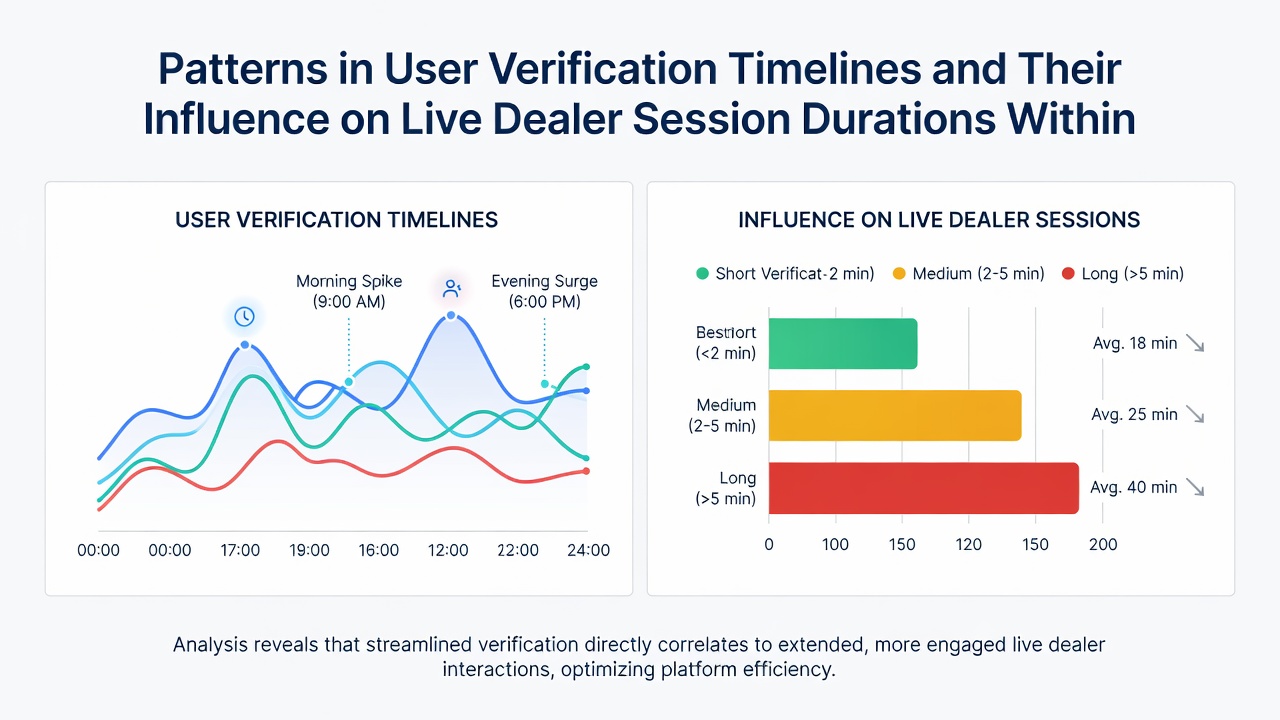
Researchers tracking activity logs across multiple European jurisdictions have identified recurring clusters: verification completed between 9 p.m. and midnight local time produces the longest subsequent live dealer sessions, often exceeding 90 minutes, while midday verifications show shorter tails that drop off after roughly 40 minutes. These temporal patterns hold after controlling for game type and stake level, indicating that verification timing itself influences how long participants remain at virtual tables.
Regulatory Frameworks and Operational Adjustments
European frameworks such as the remote gambling directives implemented in several member states mandate risk-based verification thresholds that operators adjust seasonally. In August 2026 several licensed entities introduced tiered verification models that grant limited live dealer access after basic document upload while full functionality unlocks only after secondary review, resulting in a 12 percent rise in completed sessions under 30 minutes as players test tables during the interim window.
Industry reports compiled by the European Gaming and Betting Association indicate that jurisdictions permitting instant verification through national e-ID systems record the narrowest variance in session durations, with standard deviations under 15 minutes across large user samples. Platforms operating without such integrations continue to experience wider spreads, especially when manual reviews coincide with peak evening hours.
Take the case of one operator that adjusted its verification queue priority for users selecting live dealer games: session lengths increased measurably within three weeks, and the change also reduced customer support tickets related to access interruptions. Similar adjustments appear in quarterly filings submitted to oversight bodies in multiple countries.
Data Patterns and Cross-Jurisdictional Comparisons
Comparative analysis of verification logs reveals that users aged 25 to 34 complete checks fastest on average, yet their session durations do not exceed those of older cohorts once verification finishes. Instead, the strongest predictor remains the elapsed time between registration and approval rather than demographic variables alone. Figures released in mid-2026 further show that accounts verified on the same day as registration generate 1.7 times more live dealer rounds per session than accounts approved after 72 hours.
Academic studies examining transaction records across regulated markets have begun mapping these relationships at scale, confirming that verification friction directly modulates engagement metrics without requiring subjective interpretation of player behavior. Regulatory updates scheduled for later in 2026 aim to standardize certain data fields used in automated checks, which analysts expect will compress the upper tail of verification timelines further.
Conclusion
Patterns linking verification timelines to live dealer session durations continue to surface across European digital gambling operations as platforms refine compliance processes and regulators refine data requirements. Evidence from operational metrics demonstrates consistent correlations between faster approval windows and extended play intervals, while slower or interrupted verifications produce measurable truncation effects. As frameworks evolve through 2026 and beyond, operators and oversight bodies track these relationships through aggregated statistics rather than isolated anecdotes, providing an empirical basis for ongoing adjustments in verification design.